
Building Management Systems Course
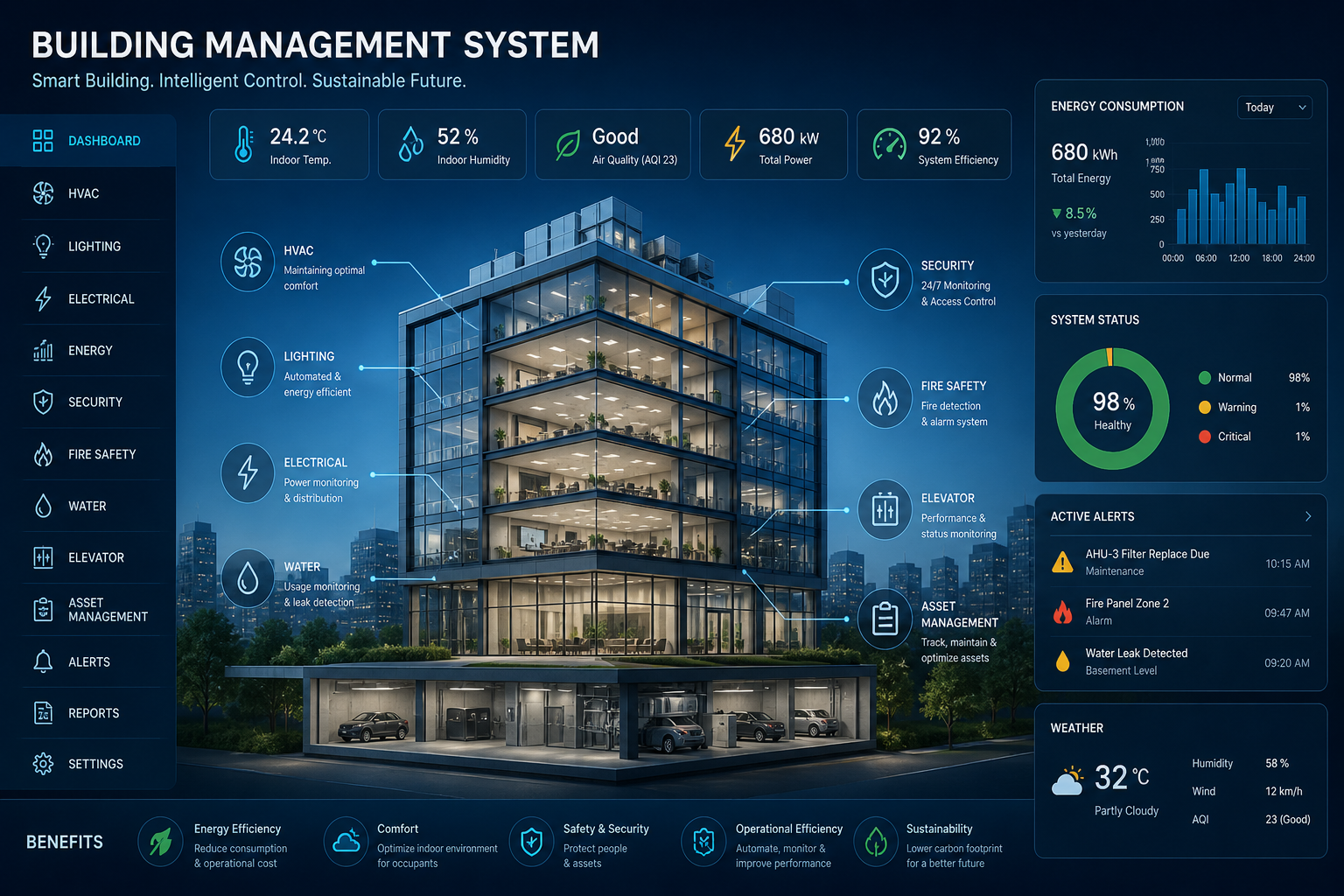
Building Management System — BMS
1. Course Overview — نبذة عن الكورس
يهدف هذا الكورس إلى تأهيل المهندسين والفنيين لفهم وتصميم وتشغيل أنظمة إدارة المباني BMS — Building Management System من الناحية النظرية والعملية، مع التركيز على ربط أنظمة التكييف والكهرباء والإنذار والمراقبة والتحكم داخل المبنى من خلال وحدات التحكم DDC/PLC والبروتوكولات الصناعية مثل BACnet و Modbus.
الكورس مناسب جدًا لمهندسي وفنيي:
Electrical Engineering
Mechanical / HVAC Engineering
Automation & Control
Facility Management
Light Current Systems
MEP Contractors
Maintenance Engineers
2. Course Objectives — أهداف الكورس
بعد انتهاء الدورة، يكون المتدرب قادرًا على:
فهم مفهوم نظام إدارة المباني BMS ودوره في التحكم والمراقبة.
التمييز بين مستويات نظام BMS:
Field Level – Automation Level – Management Level
فهم العلاقة بين أنظمة HVAC ونظام BMS.
التعرف على مكونات DDC و MCC وربطها عمليًا.
قراءة وفهم Schematic Diagrams الخاصة بأنظمة BMS.
فهم بروتوكولات الاتصال المستخدمة في BMS مثل BACnet و Modbus و IP.
تنفيذ منطق تحكم بسيط باستخدام Ladder Diagram و Function Block Diagram.
استخدام برنامج CODESYS في المحاكاة والتدريب العملي.
إعداد Sequence of Operation لأنظمة HVAC و BMS.
تنفيذ مشروع نهائي يحاكي نظام BMS متكامل.
3. Detailed Course Content — المحتوى التفصيلي المقترح
Module 1: Introduction to BMS
الوحدة الأولى: مقدمة في أنظمة إدارة المباني
What is BMS?
ما هو نظام إدارة المباني؟
Difference between BMS, BAS, EMS, and SCADA
الفرق بين BMS و BAS و EMS و SCADA
Importance of BMS in modern buildings
أهمية BMS في المباني الحديثة
Applications of BMS in:
Hotels
Hospitals
Commercial buildings
Industrial facilities
Data centers
Administrative buildings
Main international BMS companies:
Siemens
Schneider Electric
Honeywell
Johnson Controls
ABB
Delta Controls
Distech Controls
Module 2: HVAC System Overview for BMS Engineers
الوحدة الثانية: أساسيات أنظمة HVAC لمهندس BMS
Overview of HVAC systems
نظرة عامة على أنظمة التكييف والتهوية
Main HVAC equipment connected to BMS:
AHU — Air Handling Unit
FCU — Fan Coil Unit
Chillers
Cooling Towers
Pumps
Exhaust Fans
Fresh Air Fans
VAV / CAV Boxes
Sensors used in HVAC:
Temperature Sensors
Humidity Sensors
Pressure Sensors
Differential Pressure Sensors
CO₂ Sensors
Air Flow Sensors
Actuators and control devices:
Motorized Valves
Dampers
VFDs
Relays
Contactors
Module 3: BMS Hierarchical Architecture
الوحدة الثالثة: البنية الهرمية لنظام BMS
1. Field Level
مستوى الأجهزة الحقلية
Sensors
Actuators
Valves
Dampers
Flow switches
Pressure switches
Energy meters
2. Automation Level
مستوى التحكم الآلي
DDC Controllers
PLC Controllers
I/O Modules
Local Control Panels
MCC Panels
Control Logic
3. Management Level
مستوى الإدارة والمراقبة
BMS Workstation
Server
Operator Interface
Graphics
Trends
Alarms
Reports
User Management
Module 4: BMS Components
الوحدة الرابعة: مكونات نظام BMS
DDC Controller Components
مكونات وحدة التحكم DDC
Digital Inputs / Digital Outputs
المداخل والمخارج الرقمية
Analog Inputs / Analog Outputs
المداخل والمخارج التماثلية
Relay Outputs
مخارج الريلاي
Communication Ports
منافذ الاتصال
Power Supply Requirements
متطلبات التغذية الكهربائية
Field Devices Wiring
توصيل الأجهزة الحقلية
Control Panels Layout
توزيع مكونات لوحة التحكم
Module 5: MCC & DDC Integration
الوحدة الخامسة: الربط بين MCC و DDC
What is MCC?
ما هي لوحة MCC؟
Difference between Power Circuit and Control Circuit
الفرق بين دائرة القدرة ودائرة التحكم
Motor starters:
DOL Starter
Star-Delta Starter
Soft Starter
VFD
Interfacing between MCC and DDC:
Start/Stop Command
Run Feedback
Trip Feedback
Auto/Manual Status
Fault Signal
Practical wiring examples between DDC and MCC
أمثلة عملية لتوصيل DDC مع MCC
Module 6: BMS Interfacing with Building Systems
الوحدة السادسة: ربط BMS مع أنظمة المبنى
BMS with HVAC system
ربط BMS مع أنظمة التكييف
BMS with Fire Alarm System
ربط BMS مع نظام إنذار الحريق
BMS with Lighting Control
ربط BMS مع التحكم في الإضاءة
BMS with Access Control
ربط BMS مع نظام التحكم في الدخول
BMS with Elevators
ربط BMS مع المصاعد
BMS with Energy Meters
ربط BMS مع عدادات الطاقة
BMS with Pumps and Tanks
ربط BMS مع الطلمبات والخزانات
BMS with Generators and Electrical Panels
ربط BMS مع المولدات ولوحات الكهرباء
Module 7: BMS Communication Protocols
الوحدة السابعة: بروتوكولات الاتصال في BMS
Introduction to communication protocols
مقدمة عن بروتوكولات الاتصال
OSI Model simplified for BMS engineers
شرح مبسط لنموذج OSI
IP Addressing Basics
أساسيات عناوين IP
Ethernet Communication
الاتصال عبر Ethernet
RS485 Communication
الاتصال عبر RS485
BACnet Protocol:
BACnet/IP
BACnet MS/TP
Objects
Points
Devices
Modbus Protocol:
Modbus RTU
Modbus TCP/IP
Registers
Coils
Difference between BACnet and Modbus
الفرق بين BACnet و Modbus
Practical examples of protocol selection
أمثلة عملية لاختيار البروتوكول المناسب
Module 8: Schematic Diagrams & Design Documents
الوحدة الثامنة: الرسومات والمستندات التصميمية
BMS System Architecture Diagram
رسم المعمارية العامة للنظام
Control Schematic Diagrams
رسومات دوائر التحكم
Point Schedule
جدول النقاط
I/O List
قائمة المداخل والمخارج
Cable Schedule
جدول الكابلات
Riser Diagram
رسم الرايزر
Panel Layout
توزيع مكونات اللوحة
Sequence of Operation
تسلسل التشغيل
Testing & Commissioning Sheets
نماذج الاختبار والتشغيل
Module 9: Classic Control Basics for BMS
الوحدة التاسعة: أساسيات الكلاسيك كنترول الخاصة بـ BMS
Relays
Contactors
Timers
Overload Relays
Selector Switches
Push Buttons
Indication Lamps
Interlock Circuits
Auto/Manual Control
Start/Stop Control Circuits
Motor Control Basics
Module 10: DDC / PLC Programming Basics
الوحدة العاشرة: أساسيات برمجة DDC و PLC
Introduction to PLC and DDC
مقدمة عن PLC و DDC
Difference between PLC and DDC
الفرق بين PLC و DDC
Inputs and Outputs Addressing
عنونة المداخل والمخارج
Ladder Diagram Basics
أساسيات Ladder Diagram
Function Block Diagram
أساسيات Function Block Diagram
Logic Gates:
AND
OR
NOT
Timer
Counter
Comparator
HVAC Control Logic Examples
أمثلة لمنطق التحكم في أنظمة HVAC
Module 11: CODESYS Practical Simulation
الوحدة الحادية عشرة: التدريب العملي باستخدام CODESYS
Introduction to CODESYS
مقدمة عن برنامج CODESYS
Creating a new project
إنشاء مشروع جديد
Adding Inputs and Outputs
إضافة المداخل والمخارج
Ladder Programming
البرمجة باستخدام Ladder
Function Block Programming
البرمجة باستخدام Function Blocks
Simulation of:
Fan Start/Stop
Pump Control
Temperature Control
AHU Control
Alarm Logic
Interlock Logic
Testing the program
اختبار البرنامج
Troubleshooting common errors
اكتشاف الأعطال الشائعة
Module 12: BMS Software & Graphics
الوحدة الثانية عشرة: برامج BMS وشاشات المراقبة
BMS Software Overview
نظرة عامة على برامج BMS
Operator Workstation
محطة تشغيل النظام
Graphics Pages
صفحات الجرافيك
Alarm Management
إدارة الإنذارات
Trends
تسجيل وتحليل القراءات
Reports
التقارير
User Access Levels
صلاحيات المستخدمين
Scheduling
الجداول الزمنية للتشغيل
Energy Monitoring
مراقبة استهلاك الطاقة
4. Final Project — المشروع النهائي
Design and Simulation of a Complete BMS System for a Commercial Building
يقوم المتدرب بتصميم نظام BMS متكامل لمبنى إداري أو فندق أو مستشفى، ويشمل:
System Architecture Diagram
HVAC Equipment List
Field Devices List
DDC Selection
I/O List
Point Schedule
MCC-DDC Interface
BACnet/Modbus Network
Sequence of Operation
CODESYS Simulation
Alarm and Monitoring Logic
Final Presentation
if you would like to get our course content please register . . .
Jelecom Egypt
Jelecom is an Egyptian Company which has professional Engineers for Engineering Projects and it provides Technical Training and Solutions for both Engineers and Technicians in Industry & Academy
Contact Us
🗺️Address:
Building No. 73, Ramsis Street, downtown, in front of the High Court, Gamal Abdel Nasser Metro – Cairo, Egypt.
73 ش رمسيس الدور الثانى أمام دار القضاء العالي محطة مترو جمال عبدالناصر - وسط البلد - القاهرة
📱Tel ( For Training ):
01011981001 - 02 25777 134
01022612092 - 02 25777 135
01022612094 - 02 25777 137
01022612095 - 02 25777 139
📱Tel ( For Sales ):
01001605695
01008636386
01000480103
01000480104
📧E-Mail :
info@jelecom.com