
Mastering Fire Fighting Techniques & Project Design
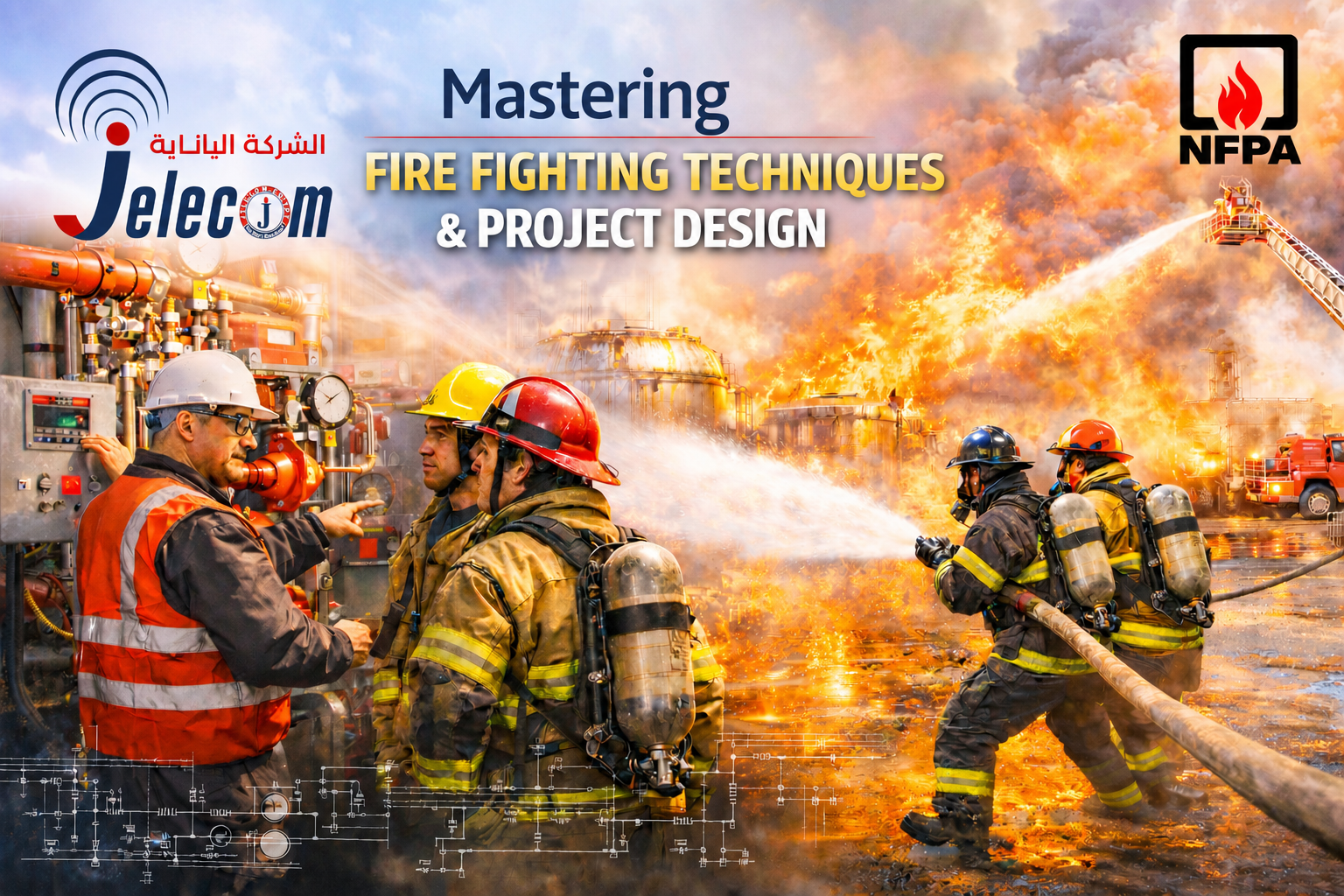
MASTERING FIRE FIGHTING TECHNIQUES
According to International Fire Protection Codes & Standards
Professional Training Course for Fire Protection Engineers, MEP Designers, Safety Engineers and Site Teams
Course Identity
| Course Title | Mastering Fire Fighting Techniques |
| Course Type | Professional, practical and project-oriented fire fighting training course |
| Core Codes | NFPA 13, NFPA 14, NFPA 20, NFPA 22, NFPA 24, NFPA 25, NFPA 72, NFPA 101, NFPA 2001 and related standards |
| Delivery Style | Technical lectures, design workshops, project case studies, field troubleshooting and inspection checklists |
| Training Outcome | Participants become able to understand, review, design, inspect, test and troubleshoot major fire fighting systems |
| Recommended Audience | Electrical, mechanical, MEP, safety, facility, maintenance, project and technical office engineers |
Why This Course Is Powerful
– The course connects code requirements with real project decisions, not only theoretical definitions.
– Participants learn the difference between Code Minimum and Engineering Best Practice in fire fighting design.
– The training explains how fire fighting systems interface with fire alarm, HVAC, smoke control, BMS, electrical power and emergency response procedures.
– The course uses practical project examples: hotels, factories, warehouses, hospitals, malls, high-rise buildings, pump rooms, substations and industrial facilities.
– Participants are trained to avoid common design mistakes that lead to Civil Defense/AHJ comments, poor hydraulic performance or unsafe operation.
– The program is suitable for engineers who want to move from basic installation knowledge to professional design, review and commissioning capability.
General Learning Outcomes
– Understand the philosophy of fire fighting systems and the role of each system in life safety, property protection and business continuity.
– Classify building and industrial fire risks and select suitable fire fighting systems according to hazard, occupancy and process conditions.
– Understand sprinkler systems, standpipe systems, fire hose cabinets, hydrant networks, water spray, deluge, foam and clean agent systems.
– Review fire pump room design, pump sizing principles, jockey pump function, diesel/electric pump operation, controller logic and supervision signals.
– Read and review fire fighting drawings, riser diagrams, pump room P&IDs, zone control assemblies and fire matrix interfaces.
– Apply practical inspection, testing and maintenance concepts according to NFPA 25 and accepted commissioning practice.
– Prepare stronger technical submittals, design checklists and project coordination notes for consultants, contractors and AHJs.
Training Methodology
| Technical Explanation | Clear explanation of system purpose, components, operation sequence and code intent. |
| Design Workshops | Step-by-step exercises for basic sizing, layout logic and design review. |
| Project Case Studies | Realistic examples from hotels, factories, warehouses, industrial plants and pump rooms. |
| Code-Oriented Thinking | Focus on NFPA intent, AHJ expectations, coordination and documentation. |
| Professional Tools | Checklists, fire matrix concepts, inspection points, common mistakes and troubleshooting methods. |
Course Structure
| Level | Title | Main Focus | Professional Result |
| Level 1 | Fire Fighting Fundamentals | Hazards, water supply, extinguishing principles, system families | Strong foundation for design and site work |
| Level 2 | Water-Based Systems & Hydraulic Design | Sprinklers, standpipes, hydrants, fire pumps, tanks, calculations | Ability to review and prepare practical designs |
| Level 3 | Advanced Systems, Interfaces & Commissioning | Deluge, foam, clean agents, fire matrix, testing, troubleshooting | Professional project and commissioning capability |
LEVEL 1 – FIRE FIGHTING FUNDAMENTALS
Professional Aim
– Build a clear engineering understanding of fire fighting systems before entering detailed design.
– Explain why different hazards require different fire fighting techniques, densities, durations and response strategies.
– Connect fire science, building risk, occupancy classification and system selection in a practical way.
Detailed Content
- Introduction to Fire Fighting Systems
– Purpose of fire fighting systems: life safety, property protection, continuity of operations and emergency response support.
– Difference between fire prevention, fire detection, fire alarm, fire suppression, fire control and manual fire fighting.
– Code Minimum versus Engineering Best Practice in fire fighting system decisions.
– Role of AHJ, consultant, contractor, insurer, facility owner and maintenance team.
- Fire Behavior and Extinguishing Principles
– Fire triangle and fire tetrahedron: fuel, oxygen, heat and chain reaction.
– Cooling, smothering, starvation and chemical inhibition as extinguishing methods.
– Surface fires, deep-seated fires, flammable liquid fires, gas fires and electrical fire considerations.
– Why water is excellent for many hazards but not suitable for all fire scenarios.
- Fire Hazard Classification
– Light Hazard, Ordinary Hazard and Extra Hazard concepts for sprinkler design.
– Storage hazards and the effect of commodity, height, packaging, plastic content and rack configuration.
– Industrial hazards: transformer rooms, generator rooms, warehouses, production areas, pump rooms, tank farms and utility areas.
– Practical risk review: occupancy, fuel load, ignition sources, fire spread paths and business interruption risk.
- Water Supply and Fire Fighting Infrastructure
– Fire water tanks, suction conditions, make-up water, usable capacity and fire water demand philosophy.
– Fire pump room components: electric pump, diesel pump, jockey pump, controllers, headers, valves and test line.
– Underground and aboveground fire mains, sectional valves, hydrants, isolation philosophy and supervision requirements.
– Importance of pressure, flow, duration, reliability and redundancy.
- Main Fire Fighting System Families
– Portable extinguishers and first-aid fire fighting equipment.
– Fire hose reel and fire hose cabinet concepts.
– Automatic sprinkler systems: wet, dry, pre-action and deluge.
– Standpipe systems: Class I, Class II and Class III concepts.
– External hydrant and monitor systems.
– Water spray, foam systems, clean agent systems and CO2 systems.
Level 1 Practical Exercises
– Identify fire fighting system types from drawings and site photos.
– Classify sample areas into practical hazard categories.
– Prepare a preliminary fire fighting concept for a small factory, hotel floor and warehouse.
– Review common design mistakes in pump rooms, risers, hose cabinets and hydrant locations.
LEVEL 2 – WATER-BASED FIRE FIGHTING SYSTEMS & HYDRAULIC DESIGN
Professional Aim
– Develop the participant from basic system knowledge to practical design and technical-office capability.
– Explain water-based systems using realistic project drawings, hydraulic logic and design checklists.
– Prepare the engineer to coordinate sprinkler, standpipe, hydrant, pump and tank requirements with architectural, civil, electrical and fire alarm disciplines.
- Automatic Sprinkler Systems According to NFPA 13
– Sprinkler system objectives, limitations and main design decisions.
– Wet pipe systems: applications, advantages, riser arrangement and inspection points.
– Dry pipe systems: applications, air pressure, trip time concept and special installation requirements.
– Pre-action systems: non-interlock, single-interlock and double-interlock concepts with fire alarm interface.
– Deluge systems: open sprinklers/nozzles, detection activation and releasing logic.
– Sprinkler types: pendent, upright, sidewall, concealed, recessed, ESFR, CMSA, residential and special sprinklers.
– Spacing, coverage, obstructions, ceiling configuration and practical layout problems.
– Density/area method, remote area concept, hose stream allowance and duration philosophy.
- Standpipe and Hose Systems According to NFPA 14
– Class I, Class II and Class III standpipe system concepts and applications.
– Wet, dry, automatic and manual standpipe system arrangements.
– Hose valve locations, staircases, landing levels, roof manifolds and fire department connection coordination.
– Pressure limitations, pressure reducing valves, zone separation and high-rise building considerations.
– Common design errors in combined sprinkler and standpipe systems.
- Fire Pumps According to NFPA 20
– Fire pump purpose, rated capacity, rated pressure and pump performance curve.
– Electric fire pump, diesel fire pump and jockey pump functions.
– Controller operation philosophy and the critical rule that fire pumps are not automatically stopped by pressure recovery.
– Suction piping, discharge piping, test header, flow meter loop, relief valve and circulation relief valve concepts.
– Diesel engine room ventilation, fuel tank, exhaust routing and supervision requirements.
– Fire pump signals to fire alarm system: pump running, loss of power, phase reversal, controller trouble and supervisory conditions.
- Fire Water Tanks, Fire Mains and Hydrants
– Fire water tank sizing logic based on system demand and required duration.
– Usable water volume, vortex prevention, low-level alarms, refill and maintenance access.
– Underground fire mains, valves, thrust blocks, flushing, hydrostatic testing and sectional isolation.
– External hydrant spacing philosophy, fire brigade access and fire department connection strategy.
– Monitors and hydrants for industrial and petrochemical applications.
- Hydraulic Calculation and Design Review
– Basic relationship between flow, pressure, pipe diameter, friction loss and elevation loss.
– Sprinkler K-factor, flow calculation, pressure requirement and remote area demand.
– Why the hydraulically most demanding area is not always visually obvious.
– Pump head calculation concept: static head, friction loss, residual pressure and safety margin.
– Review of hydraulic calculation reports, assumptions, node references and design density.
– Coordination between hydraulic calculations, drawings, specifications and pump selection.
Level 2 Practical Workshops
– Prepare a sprinkler concept design for a hotel, office area, warehouse and production hall.
– Review a pump room P&ID and identify missing valves, test connections, supervisory points and maintenance issues.
– Prepare a simple fire water tank and pump demand summary.
– Review a combined sprinkler and standpipe riser diagram for a high-rise building.
– Build a practical design checklist for NFPA-oriented project submission.
LEVEL 3 – ADVANCED FIRE FIGHTING SYSTEMS, INTERFACES & COMMISSIONING
Professional Aim
– Prepare participants for advanced project environments where fire fighting, fire alarm, process safety and facility operation must work together.
– Explain special protection systems and how to integrate them into a complete fire and life safety strategy.
– Train engineers to review cause-and-effect logic, commissioning procedures, acceptance tests and maintenance requirements.
- Water Spray, Deluge and Special Water-Based Protection
– Deluge system philosophy for high-challenge industrial risks.
– Water spray protection for transformers, turbine areas, cable galleries, conveyors and process equipment.
– Nozzle selection, spray pattern, exposure protection and obstruction considerations.
– Releasing logic: detection, manual release, abort, solenoid valve, deluge valve, supervision and alarm signals.
– Typical design errors that cause poor water distribution or delayed system operation.
- Foam Fire Fighting Systems
– Foam application for flammable and combustible liquid hazards.
– Low-expansion, medium-expansion and high-expansion foam concepts.
– Foam proportioning methods, bladder tanks, foam pumps, balanced pressure and in-line proportioners.
– Foam chambers, foam makers, monitors, handlines, sprinkler foam-water and deluge foam-water systems.
– Practical requirements for tank farms, loading racks, aircraft hangars and industrial facilities.
- Clean Agent, CO2 and Special Suppression Systems
– When water-based systems are not the preferred solution: electrical rooms, data centers, control rooms and sensitive assets.
– Clean agent system concepts including total flooding, design concentration, hold time and room integrity.
– CO2 system hazards, personnel safety limitations and the difference between total flooding and local application.
– Aerosol and water mist concepts as special suppression alternatives.
– Integration with fire alarm releasing panels, cross-zone detection, pre-discharge alarm and emergency controls.
- Fire Alarm Interface and Fire Matrix for Fire Fighting Systems
– Flow switch, tamper switch, pressure switch, low air pressure, valve supervision and pump room monitoring.
– Cause-and-effect matrix for sprinkler systems, pre-action systems, deluge systems, fire pumps and clean agent systems.
– Interfaces with HVAC, smoke control, access control, elevators, emergency power, BMS and SCADA.
– Difference between alarm, supervisory and trouble signals in fire fighting system monitoring.
– Practical examples for hotels, factories, warehouses, substations and pump rooms.
- Inspection, Testing, Commissioning and Maintenance According to NFPA 25 Concepts
– Commissioning steps: visual inspection, flushing, hydrostatic test, functional test, alarm test and acceptance documentation.
– Routine inspection points for valves, gauges, pumps, tanks, sprinkler risers, hose systems and hydrants.
– Fire pump churn test, flow test, diesel engine checks and controller supervision.
– Impairment management, documentation, tagging and emergency procedures.
– How to diagnose common problems: low pressure, closed valves, air trapped in pipework, wrong pump performance, faulty switches and delayed alarms.
- Technical Office, Submittals and Professional Deliverables
– Fire fighting basis of design and design narrative.
– Shop drawings, riser diagrams, pump room P&IDs, hydraulic calculations and material submittals.
– Coordination drawings with architectural, structural, electrical, HVAC and fire alarm systems.
– Method statements, inspection test plans, material inspection requests and commissioning forms.
– Final handover package, as-built drawings, O&M manuals and training records.
Level 3 Practical Workshops
– Prepare a fire matrix for a fire pump room, pre-action system, deluge system and clean agent system.
– Design a protection concept for a transformer room, generator room, warehouse and tank farm area.
– Review commissioning checklists and identify acceptance-test failures.
– Prepare a professional technical-office checklist for fire fighting project submission.
– Discuss real failures: why correctly installed systems can still fail during an actual fire.
Professional Project Applications Covered
| Application | Key Fire Fighting Focus | Main Coordination Needs |
| Hotels and Resorts | Sprinklers, standpipes, pump room, tanks, hose cabinets, voice evacuation interface | NFPA 101, fire alarm, smoke control, elevators and emergency power |
| Factories | Hazard classification, sprinklers, hydrants, fire pumps, special hazards | Process layout, ventilation, utilities, maintenance and emergency response |
| Warehouses | Storage classification, sprinkler density, obstruction control, hydrants | Rack layout, commodity class, ceiling height and insurance requirements |
| Hospitals | Life safety, zoned evacuation, reliable water supply and system monitoring | Fire alarm, smoke compartments, medical areas and facility continuity |
| Malls and Assembly Areas | Sprinklers, standpipes, hose cabinets and high occupant load protection | Egress, smoke control, public address and tenant coordination |
| High-Rise Buildings | Zoned standpipe, PRVs, pump head, roof manifolds and stair protection | Pressure zoning, fire department access and elevator recall |
| Data Centers | Pre-action, clean agent, water mist, detection and release logic | BMS, HVAC shutdown, room integrity and business continuity |
| Industrial Utilities | Transformers, generators, pump rooms, fuel systems and cable areas | Electrical safety, ventilation, gas detection and emergency shutdown |
Code Minimum versus Engineering Best Practice
| Topic | Code Minimum | Engineering Best Practice |
| System Selection | Provide the required system for the occupancy or hazard. | Select the system that also considers reliability, maintenance, business continuity and future expansion. |
| Pump Room | Install compliant fire pump equipment and controllers. | Design for access, ventilation, drainage, clear labeling, testing safety and long-term maintainability. |
| Hydraulic Design | Meet required flow, pressure, density and duration. | Check real-life obstructions, future modifications, valve positions and commissioning constraints. |
| Monitoring | Monitor required alarm, supervisory and trouble signals. | Create a clear fire matrix that helps operators respond correctly and quickly. |
| Handover | Submit required drawings and test documents. | Provide complete training, O&M guidance, impairment procedures and maintenance checklists. |
Expected Participant Deliverables After Training
– Fire fighting system selection checklist for different occupancies and industrial hazards.
– Sprinkler and standpipe design review checklist.
– Fire pump room review checklist and monitoring signal schedule.
– Fire fighting cause-and-effect matrix template.
– Commissioning and acceptance-test checklist.
– Technical-office submittal checklist for drawings, calculations, material data and handover documents.
– Professional understanding of how to discuss comments with consultants, AHJs and client representatives.
JELECOM Competitive Strength
– JELECOM delivers the course in a practical engineering style based on project experience, code knowledge and real site problems.
– The course is designed for engineers who need practical competence, not only awareness-level training.
– Training is suitable for design offices, contractors, consultants, industrial companies, hotels, hospitals, facility teams and safety departments.
– Eng. Gamal Abdelaty Hasanin and JELECOM provide a strong professional training environment for Fire Protection, NFPA Codes and Light Current Systems.
MASTERING FIRE FIGHTING TECHNIQUES
From Code Requirements to Professional Project Application
if you would like to get access to our free workshop/session please register . . .
Jelecom Egypt
Jelecom is an Egyptian Company which has professional Engineers for Engineering Projects and it provides Technical Training and Solutions for both Engineers and Technicians in Industry & Academy
Contact Us
🗺️Address:
Building No. 73, Ramsis Street, downtown, in front of the High Court, Gamal Abdel Nasser Metro – Cairo, Egypt.
73 ش رمسيس الدور الثانى أمام دار القضاء العالي محطة مترو جمال عبدالناصر - وسط البلد - القاهرة
📱Tel ( For Training ):
01011981001 - 02 25777 134
01022612092 - 02 25777 135
01022612094 - 02 25777 137
01022612095 - 02 25777 139
📱Tel ( For Sales ):
01001605695
01008636386
01000480103
01000480104
📧E-Mail :
info@jelecom.com